How-To
13 Years of Natural Hair Lessons: What Finally Helped Me Retain Length
After 13 years of trial and error, here's what actually worked for growing and retaining length on natural hair.
Introduction
Growing long, healthy natural hair feels like solving a complex puzzle. You try products, follow routines, and hope for the best—but sometimes your hair stays stuck at the same length no matter what you do. I've been there. For over a decade, my hair was either long and unhealthy or short and healthy, but never both at the same time. It wasn't until I made some intentional changes that everything finally clicked. Here's what I wish someone had told me years ago.
Choose Styles That Match Your Lifestyle
One of the biggest mistakes I made was forcing my hair into styles that didn't fit my actual life. I used to slick my hair back perfectly every single day—baby hairs laid, defined ponytail, the whole look. While there's nothing wrong with that, it wasn't getting me anywhere toward my length goals.
The game changer was choosing styles that actually work with my lifestyle. I work out frequently and take swim lessons, so twists have become my go-to. They're durable, easy to maintain, and I don't dread doing them every week. The key is finding a style that you feel confident in while also supporting your hair goals. When you find that sweet spot, you'll have a reliable default hairstyle that keeps your hair healthy and protected.
Accept That Your Hair Transforms Over Time
Early in my journey, I thought my hair always had to look perfect. Any frizz or signs of wear, and I'd immediately restyle. I learned that this constant manipulation was working against me.
Natural hair changes significantly from day one to day five of a style. That's completely normal. As long as your hair is moisturized and the style isn't completely done for, it's fine to let it breathe. Over time, you'll learn to work with your hair instead of against it.
I also started planning my styles around my schedule. If I know I have an event midweek, I'll use the first half of the week to prep my hair instead of forcing a style on the day-of. Life is unpredictable, and minimizing manipulation is the goal.
Stop Touching Your Hair
This might be the most important change I made: I don't touch my hair in between wash days unless I absolutely need to. Once it's styled, it's styled for the week.
Every time you manipulate your hair, you increase the risk of breakage and single-strand knots. The length I've retained over the past two years is directly correlated to how little I touch my hair between wash days. It feels counterintuitive, but less is more when it comes to natural hair maintenance.
Get Regular Trims
I used to hate trims. I thought my hair was fine just because it was long. I rarely got trims unless I was getting a silk press, and even then, it was infrequent. I tried trimming my own hair once and chopped off too much because I didn't know what to look for. After that, I avoided trims altogether.
Big mistake. Trims are essential because they stop split ends from traveling up the hair shaft, which creates that thin, see-through, uneven look. Consistent trims also maintain your hair's fullness and body.
Now I get trims every four months like clockwork, even when I don't think I need one. A trusted stylist might notice things you've never considered. I've asked my stylist questions like whether my hair is fine or medium strand, or what my density is. Partnering with a professional is invaluable.
How do you know it's time for a trim? During detangling, if your brush isn't gliding through easily and keeps getting caught on the ends, that's a sign. You can also examine a random piece of hair—if you see tiny knots at the very ends, it's time. If you blow your hair out and the length is smooth but the ends are crunchy, you likely need a trim. Your hair will tell you if you listen.
Understand Your Products
It's not always about what products you have—it's about knowing how to use them and what they're actually for. I genuinely believe lack of product knowledge is why natural hair care feels more complicated than it really is. Learning to distinguish between product labels and marketing claims will give you so much clarity.
To simplify, you really only need a few key products: a clarifying shampoo, a moisturizing shampoo, a good deep conditioner, a leave-in conditioner, and a reliable styler. Understanding what each product does eliminates the confusion and helps you build an effective routine.
Consider Your Nutrition
I started taking a multivitamin recently—not to grow my hair, but because I suspected I was deficient in nutrients. My hair had been stuck at the same length for six months to a year. I was doing everything right with my hair care, but the length retention just wasn't there.
It wasn't until I connected the dots that maybe my body needed extra support. It's hard to get all your nutrients from diet alone unless you eat perfectly. Our hair is keratin, which is protein, and it needs vitamins like biotin, vitamin D, iron, zinc, and omega-3s to function optimally. Many Black women are already deficient in some of these nutrients.
I can't say for certain if it's the multivitamin or a placebo effect, but after two months, my hair is growing again. I went from being stuck at shoulder length to brush-up length. Talk to your doctor and consider blood tests if you're experiencing length retention issues despite doing everything correctly. What you put inside your body matters as much as what you put on your hair.
Wash Your Hair Regularly
For some reason, I wasn't washing my hair regularly in the early stages of my journey. When I did wash it, I wasn't doing it correctly. I'd often just wet my hair enough to redefine curls that were ten days old and covered in gel buildup, then apply more gel. The result was gummy, sticky hair that never responded well.
Once I became intentional about my hair journey, I understood the importance of regular washing. For me, that's weekly—sometimes twice a week due to swimming. Your washing cadence might be different. A good way to figure it out: after washing, conditioning, and styling your hair, notice how long it stays moisturized before it needs cleansing again. That timeframe is your ideal washing frequency. Consistency in your washing routine will change how your hair responds to everything.
Detangle Gently
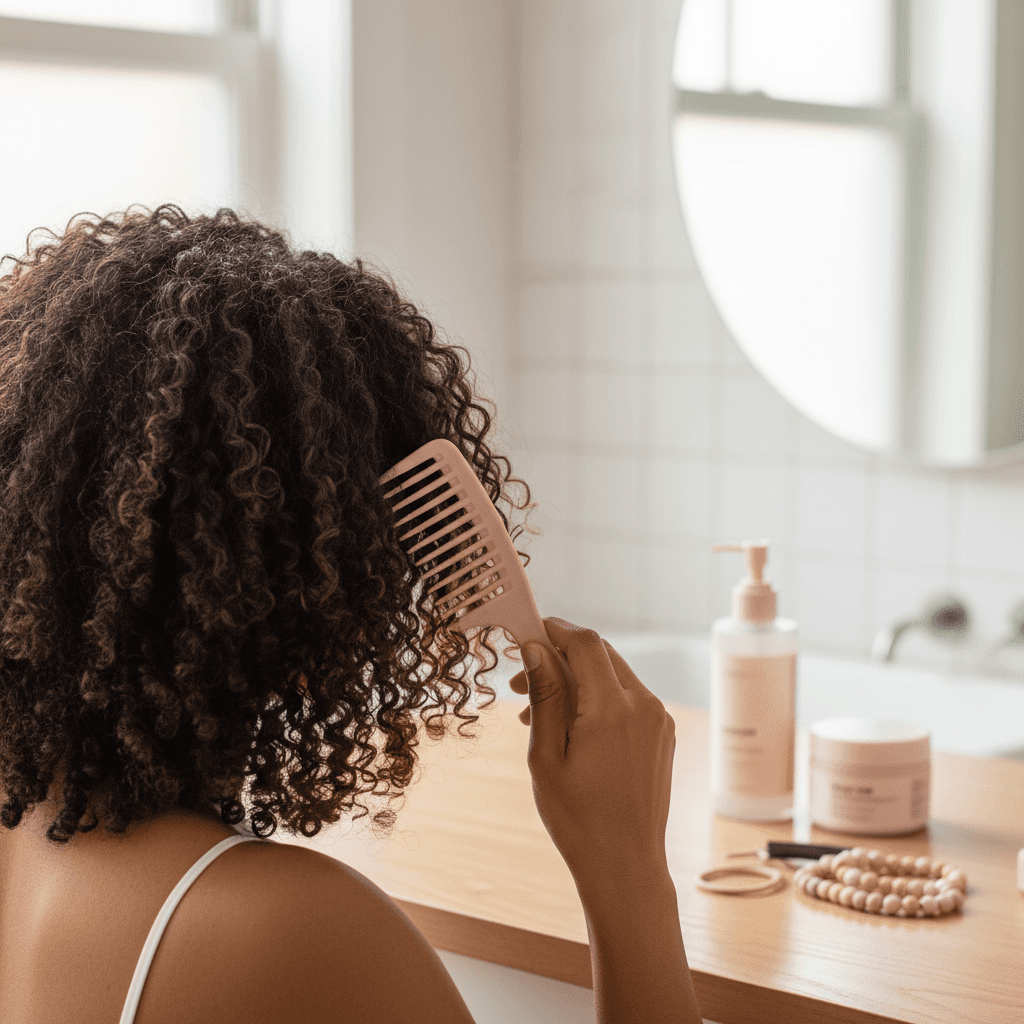
I've always been fairly careful about how I detangle. In the early days, I finger detangled in the shower with conditioner—that's the gentlest approach. While nothing beats finger detangling, it takes time. The Unbrush is a great alternative that works well for me. The key is using a conditioner with plenty of slip, adding water, and taking your time. This approach has cut my wash days in half.
Conclusion
It took me over a decade to learn that having long hair and having healthy hair aren't the same thing. Length retention isn't about one magic product or technique—it's about technique, product knowledge, and lifestyle all working together. Start with what you can implement today, be patient with the process, and remember that your hair will tell you what it needs if you pay attention.